

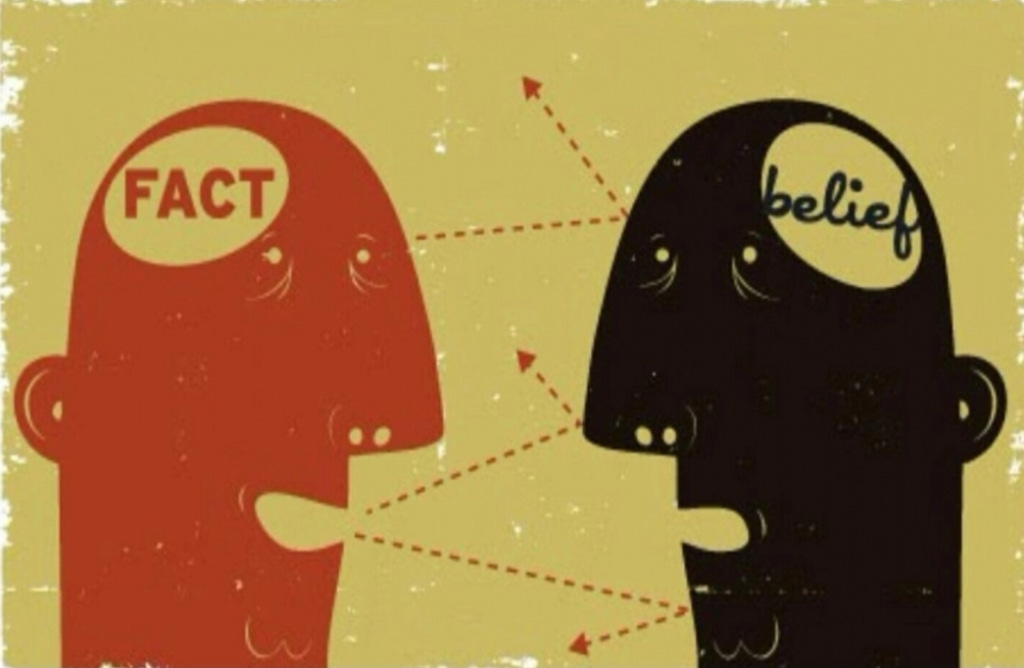
There is something quietly unsettling about realizing your mind—the instrument you use to evaluate yourself, others, and the world—follows its own agenda. Not a sinister one, but like an overworked assistant using outdated tricks, whether or not they still fit.
That is, in essence, what cognitive bias is: a built-in feature of human cognition, not a character flaw. Our brains evolved to process information quickly under enormous pressure. In environments where hesitation could be fatal—where the rustle of leaves in a nearby bush could mean either wind or a predator—the brain that could quickly recognize patterns was the one that survived. The legacy of this evolutionary pressure is a brain architecture that prioritizes speed over accuracy and familiarity over novelty.
Neurologically speaking, we are built to take shortcuts.
Building on this, these shortcuts, called heuristics in psychological terminology, are impressive feats of cognitive economy. They allow us to navigate daily life without deliberating every micro-decision from first principles. For example, you don’t consciously consider the biomechanics of walking when you cross a room. You don’t reconstruct the grammar of your native language each time you speak. The brain automates whatever it can, freeing up conscious bandwidth for things that genuinely require attention. In this sense, cognitive bias is not a malfunction; it is the system working as designed.
The trouble begins when these same mechanisms operate in a territory for which they were never designed. Modern life presents the brain with conditions that have no evolutionary precedent: twenty-four-hour news cycles, algorithmic information streams, and the urge to form opinions on complex issues with limited data. A brain wired for the savanna is now asked to assess geopolitical risk and to evaluate contradictory medical studies. It responds by pattern-matching, generalizing, and reaching for whatever information feels most emotionally vivid and available.
Availability bias is a good illustration. We assess the probability of events not by statistical computation but by how easily examples come to mind. Rare, dramatic events—a violent crime, a disease outbreak, a catastrophic accident—register as more common than they are. This is because they are widely covered and discussed, and are deeply ingrained in memory. Meanwhile, real and prevalent risks fade from view because they lack the emotional charge to make information stick. The result is a distorted map of reality that, from inside, feels like accurate perception.
Confirmation bias operates at an even more fundamental level. Rather than simply misremembering, we actively filter information to protect existing beliefs. This is not mere stubbornness; it has a structural basis. The brain treats consistency as cognitive efficiency. It takes less energy to assimilate information that fits an established schema than to revise the schema. Each time a belief is confirmed, it grows more rigid. Contradictory evidence that slips past gets quietly rationalized away. In psychotherapy, this pattern is visible. Clients often arrive already knowing what they want to conclude. The therapeutic work is frequently less about supplying new information and more about creating conditions where contradictory data can be tolerated long enough to actually land.
This is where cognitive bias connects directly to mental health. Biased thinking is not just an epistemological inconvenience. It is a primary way psychological distress is maintained. Anxious minds catastrophize through availability bias, reaching for worst-case scenarios. These scenarios have been rehearsed so thoroughly that they feel inevitable. Depressed minds engage in self-confirmation bias, selecting only evidence of failure and incompetence. They discount everything that does not fit. Interpersonal conflicts often persist not because of real disagreement, but because both parties see the same events through incompatible cognitive filters. Each filter feels like a transparent reality.
What, then, is the practical response? Awareness is no small thing. Knowing that your brain distorts certain types of information is a meaningful intervention. But awareness does not eliminate bias. It creates a gap between stimulus and response, between perception and conclusion. That gap allows for genuine reflection. This is part of what metacognition means: thinking about one’s own thinking and observing the process rather than being swept away by it.
Alongside awareness, cognitive flexibility functions as both antidote and skill — and it is worth framing it as the latter. We tend to talk about open-mindedness as a personality trait, something you either have or you don’t. But cognitive flexibility is more accurately understood as a form of critical thinking: a capacity that can be deliberately cultivated through practice. It involves holding competing hypotheses simultaneously, interrogating the evidence for each, and resisting the pull toward premature closure. In this sense, it has as much in common with rigorous reasoning as with temperament. The question is not whether you are open-minded, but whether you are practicing the cognitive habits that make open-mindedness possible.
This is precisely the territory that cognitive behavioral therapy occupies. CBT is, at its core, a structured practice in metacognition. When patients present with cognitive distortions—the reflexive catastrophizing, the black-and-white thinking, the personalization of neutral events—the therapeutic work is not to talk them out of their feelings, but to teach them to examine the reasoning behind them. Patients learn to treat their automatic thoughts as hypotheses rather than facts: What is the evidence for this belief? What is the evidence against it? Are there alternative explanations I have not considered? The method works, in part, because it temporarily suspends emotional weight from the evaluation process—not by suppressing emotion, which is neither possible nor the goal, but by creating enough distance from a thought to inspect it with something closer to intellectual honesty. Over time, patients develop an internalized capacity to audit their own cognition, which is a rather elegant description of bias awareness applied therapeutically.
There is also a social dimension. The strongest check on individual bias is other minds—people whose blind spots differ, whose investments cut differently, and who reach different conclusions with the same sincerity. This is why scientific consensus is more reliable than any lone opinion. Intellectual isolation leads to increasingly distorted thinking. The mind, left alone in its own echo chamber, does not refine itself. It amplifies.
None of this is cause for despair. The human brain can identify its own structural limits and try to compensate. The organ responsible for bias can also design ways to reduce it. That reflexivity is distinctly human, and valuable. The goal is not a bias-free mind. That is not achievable and may not even be desirable. The aim is to hold our conclusions more lightly. Stay curious a little longer before deciding you know.
That, ultimately, is both good science and good therapy.