

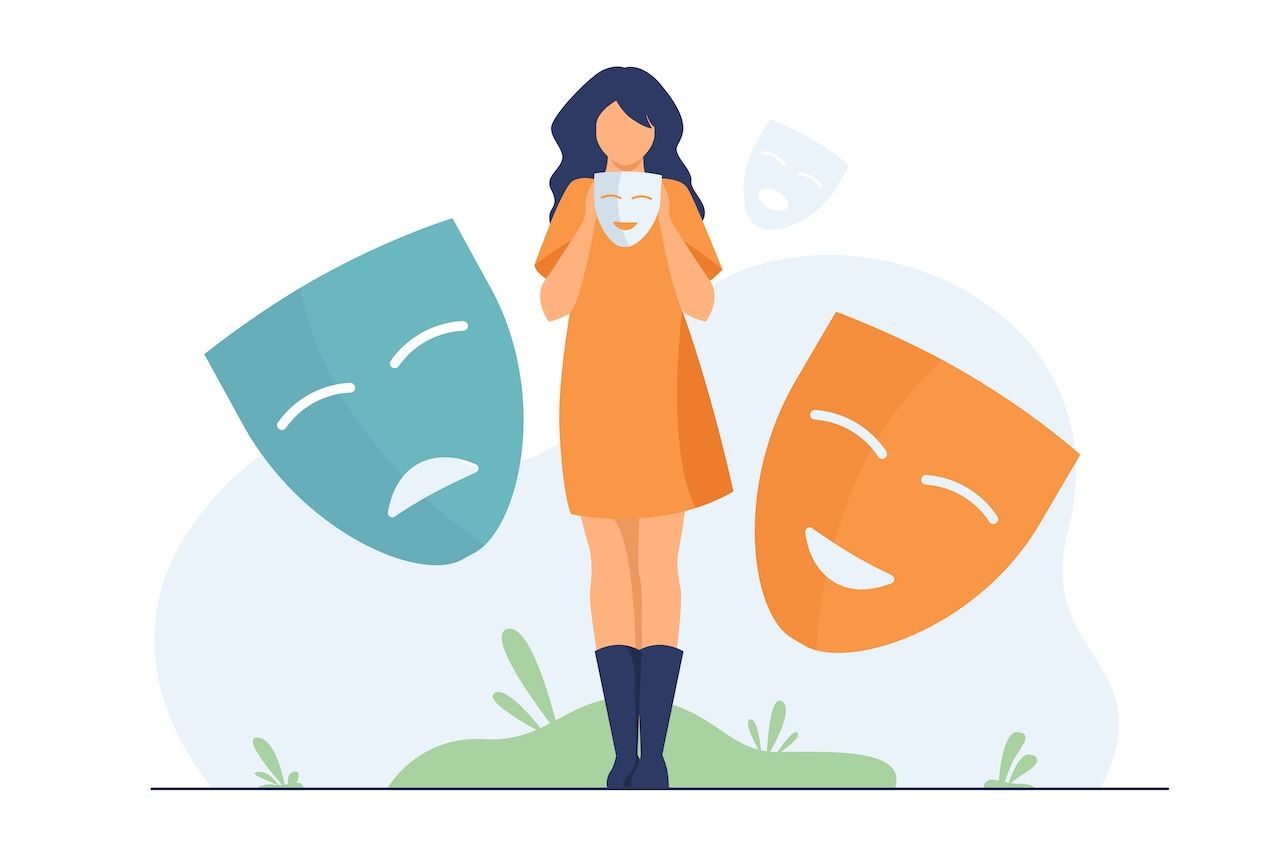
Most of us quietly resist the idea that we are responsible for half of any recurring argument or conversation that ends badly. Not philosophically, but practically. Your emotional patterns, default interpretations, and the history logged by your nervous system arrive before you do. They remain long after you are gone.
That is not a comfortable thought. It is, however, a load-bearing one.
Traits that serve you well in one context can backfire and ambush you in another. Someone who reads a room with precision may also perceive threat in neutral feedback. Those who hold others accountable may not extend the same grace to themselves. Self-knowledge is not a destination. It is an ongoing, sometimes humbling process of noticing—and noticing again, because you will forget.
What the ego is actually doing
Accurate self-perception requires something difficult: honest introspection without an audience. The ego’s primary function is self-preservation. It is remarkably good at this. To maintain the fragile coherence of your identity narrative, it will sacrifice clarity, distort evidence, and rewrite history to create a flattering account of events. This does not feel like lying. It feels like perspective.
The mechanism is subtle enough that most people never catch it in the act. You do not see yourself as distorting reality. You see yourself as seeing it clearly, while others are unreasonable, oversensitive, or obtuse. The interpretation arrives pre-justified. And because the ego works from genuine feeling—you really did feel dismissed, undermined, or unfairly treated—the distortion is hard to challenge from inside. Feelings are not evidence of facts, but they appear exactly like evidence; that is, most of the problem.
The practical cost in relationships is significant. If you always believe you are the reasonable party in a conflict, you will keep arriving at the same impasses. You will be baffled by a pattern you inadvertently helped build. Distorting reality is not self-care. It systematically disables your own problem-solving ability.
The goal here isn’t harsh self-bashing—that’s just your ego working in reverse. What’s useful is curiosity: What am I really doing, and what is it costing me?
The difference between reacting and responding
A reaction is automatic. It’s your nervous system executing a pre-written script usually drafted under duress and never formally revised. A response, on the other hand, requires significantly more: a pause, a breath, and a moment of deliberate choice.
Between stimulus and response there is a space. In that space is our power to choose our response. In our response lies our growth and our freedom.—Viktor Frankl
When triggered, the most powerful thing you can do is nothing. Not as strategic silence or passive aggression, but as true self-regulation. The surge after a trigger is real, intense, and almost always premature. The urge to send a message, make a call, fire back: it passes. Your work is simply to pause and let it pass.
Responsibility lives here. It is not in the trigger, which you did not choose, but in the interval between being triggered and acting. That interval can be tiny or generous. It depends on how much you have practiced expanding it.
The question of ownership
Not every emotional disturbance that lands in your lap belongs to you, and part of maturity is learning to draw that line with some precision. Empathic people in particular tend to absorb others’ distress as a form of care, then wonder why they feel perpetually depleted. It is a generous impulse, but it has an unfortunate structural flaw.
The clinical term for this is over-responsibility. It operates under the unconscious logic that if I feel it, it must be my responsibility to fix it. While this is understandable, it is also incorrect. Emotions are contagious neurologically, not just metaphorically. We’re equipped with mirror neurons that enable empathy, but we are also emotional sponges. Walk into a room where someone is quietly furious, and your body may register it before your mind does. Spend enough time near someone in chronic distress, and your baseline will shift. The absorption is real. But it does not automatically mean that you caused it or that you must resolve it.
The truth does not change according to our ability to stomach it. —Flannery O’Connor
When you take responsibility for emotions that are not yours, two things happen: you overextend yourself and quietly deprive the other person of the chance to own their part. This might look like generosity, but it functions more as avoidance on both sides. Real accountability is specific. It asks, what did I actually contribute to this, rather than assuming the answer is everything or, just as unhelpfully, nothing.
This is not a license for indifference. It argues for precision, a more honest care than reflexive absorption.
What this work actually looks like
None of this—the pausing, the honest accounting, the careful drawing of lines — is a one-time recalibration. It is neither linear nor particularly comfortable. Triggers you were certain you had resolved have a way of reappearing in slightly different clothing, particularly under stress or in intimate relationships where your defenses are appropriately lower.
This is worth sitting with, because it is the part that tends to discourage people most. Progress in emotional regulation does not mean you stop having emotional reactions. Instead, it means your emotional responses resolve more quickly. For example, the time between feeling triggered and returning to calm gets shorter, your reactions cause less disruption, and you start to notice your patterns before they fully take over. Recognizing your own early signs of reactivity is a significant step; it actually makes up much of the work of emotional regulation.
The capacity to pause, to own your part accurately rather than excessively, to return a borrowed emotion to its rightful owner — none of these are natural talents. They are skills developed through repetition in conditions that are specifically designed by life to make them difficult.
That gap between trigger and choice, though narrow, is where character grows. Not in calm moments, when being reasonable is easy, but in the hard ones—when the impulse is strong, the pause is hard, and you choose it anyway.
"Progress in emotional regulation does not mean you stop having emotional reactions. Instead, it means your emotional responses resolve more quickly."
I've noticed this anecdotally with myself and the few clients I've taught emotional regulation to. I didn't realise it was a well known thing though, so thanks for sharing :)
“The capacity to pause, to own your part accurately rather than excessively, to return a borrowed emotion to its rightful owner — none of these are natural talents.”
I work with couples that struggle with addictions and infidelity. The work does rely heavily on finding their own part to something that makes no sense.