

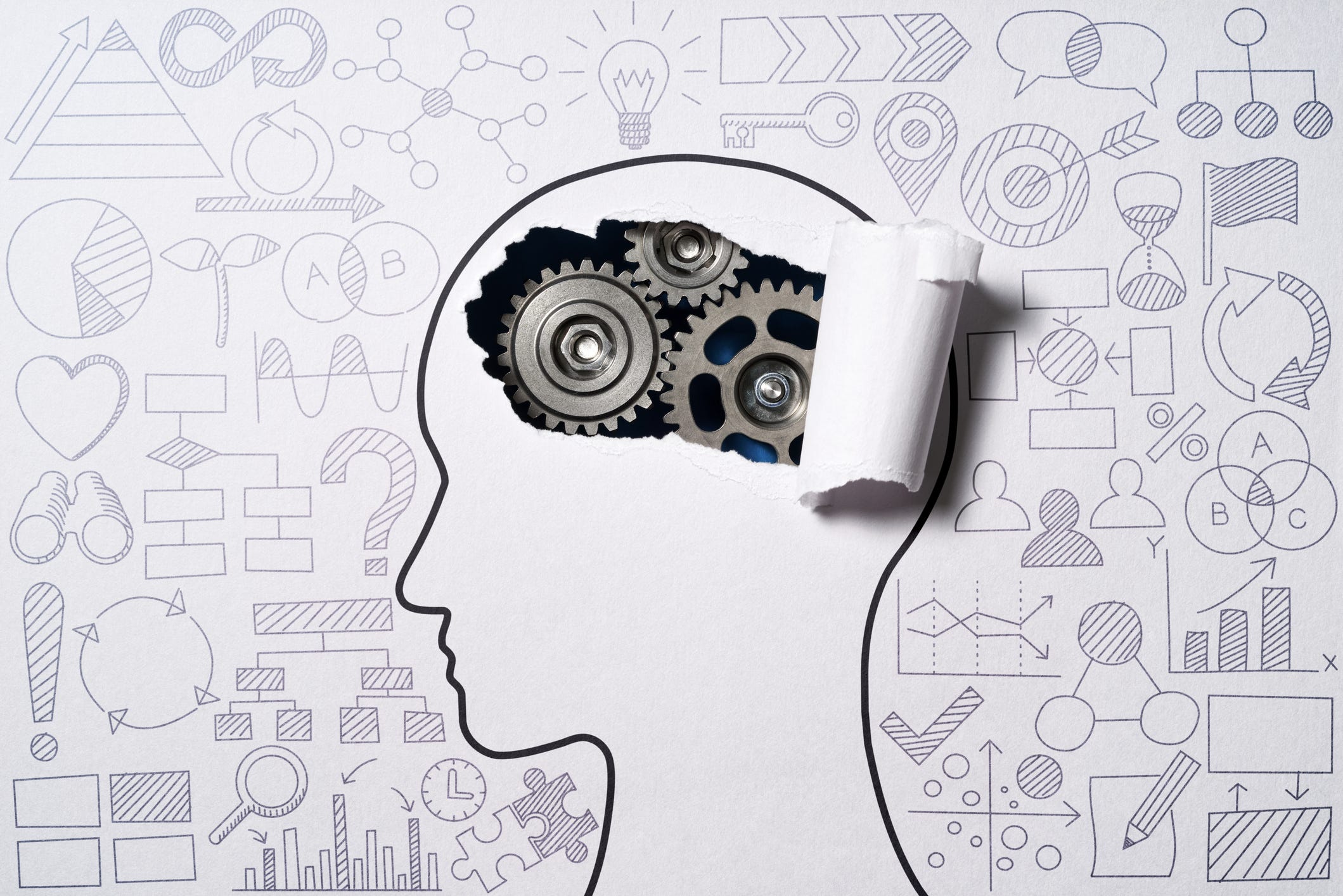
The story we tell ourselves is that people have gotten dumber and that technology is to blame. The truth is more uncomfortable and more interesting. People have gotten intellectually lazy—and the mind, given the option, will always choose ease over rigor.
The most consistent finding in social psychology over the past fifty years is one most people would rather not internalize: human beings rarely reason like impartial scientists. We reason like lawyers. The conclusion arrives first—delivered by intuition, emotion, beliefs, group membership, or self-interest—and the mind is then conscripted to defend it. Intelligence helps, but not in the way most people assume. Smarter people are not more open to being wrong. They are better at constructing arguments for what they already believe. Cognitive horsepower without intellectual humility produces a particular kind of person: confidently mistaken, eloquently defensive, immune to correction.
The first thing worth seeing clearly is recognizing how intuition shapes arguments. Critical thinking is not intelligence. It is intellectual self-discipline; it’s the willingness to sit with uncertainty and test whether your initial conclusion survives scrutiny. The obstacle is rarely an inability to think. It’s usually an unwillingness to pay the emotional cost of possibly being wrong about something you’ve publicly endorsed, built your life around, or based your self-image on.
The brain perceives cognition as costly because evolution made it so. We survived not because we were accurate, but because we were fast, stayed together, and aligned with those who fed and defended us. Heuristics save energy by enabling quick action. Tribes preserve life. In modern times, however, the mind shaped by those conditions exists in an environment engineered to remove almost all incentives for deep thinking. The landscape has shifted: Search engines retrieve information, feeds curate content, summaries condense data, and recommendations decide what we see. These systems aren’t corrosive, but their abundance influences the brain’s habits. With this level of ease, the brain decides that deep processing is optional and too costly. Comfort is the most potent sedative for cognition ever devised. We’ve transitioned from striving to understand reality to managing access to it. Retrieval, not comprehension, has now become dominant.
On a large scale, this creates what cognitive psychologists call the “illusion of explanatory depth”: the difference between knowing something and feeling like you understand it. Exposure produces familiarity. Familiarity breeds fluency. Fluency feels like truth. For instance, you may watch a ten-minute video on monetary policy, attachment theory, or epigenetics and feel as if you understand it well, but actually lack a working mental model. True comprehension reveals complexity and fosters modesty, whereas pseudo-comprehension breeds certainty. The most dangerous graduate students were never those who admitted, “I don’t understand this yet.” They were always the ones who were convinced they already did.
Then identity enters, and reasoning gets harder. Beliefs are not isolated in a neutral mental warehouse; they serve as social signals. They communicate where you belong, who you trust, and how you see yourself. Political views, parenting philosophies, dietary choices, and therapeutic orientations all show others something about you, and tell you something about yourself. When a belief becomes an identity marker, contradicting it no longer feels like updating a file—it feels like losing membership. Thus, arguments from evidence often fail because the person across from you is not defending an idea. They are protecting an attachment, a community, a set of beliefs, and a coherent sense of self. When asked to reconsider a belief, it’s often perceived as a threat to their identity.
Once beliefs become tied to identity, cognitive biases take center stage. Confirmation bias is considered a cognitive bug, but for many people, it functions as a feature. In dense social dependence, we prioritize alliance-preserving information as a survival strategy. In an age of information abundance and social segmentation, however, this feature becomes a defect. The machinery that once protected groups now creates polarization. People stop asking if their beliefs are true and only ask if the beliefs are theirs.
Echo chambers complete the architecture. Growth requires contact with disconfirming evidence, yet exposure alone is ineffective unless disagreement feels psychologically safe. When everyone mirrors your assumptions, certainty masquerades as competence. Curiosity, lacking traction and reward, quietly atrophies. Closed groups mistake agreement for validity. As the loop persists, participants grow more confident but less calibrated. That’s how partisanship thrives
At the root of group dynamics, emotion often drives reason more than facts. Emotions determine awareness, urgency, allocation of cognitive resources, and what gets ignored. Fear narrows. Outrage accelerates. Anxiety scans for threat. Belonging strengthens conformity. Media ecosystems exploit emotional architecture, not reason. Outrage travels because outraged minds process less, share more. The content was never the point; activation was.
Understanding the emotional roots of reasoning leads us to a deeper question: This is a clinical problem, not just a cultural one. Critical thinking requires emotional maturity as much as analytical skill. Updating a belief means absorbing the cost of having held it—embarrassment, grief, and sometimes the recognition that years were spent defending something undeserving. Psychological flexibility is revising beliefs without losing yourself. It is the quiet, internal sentence: if this is wrong, I remain whole.
Critical thinking requires emotional maturity as much as analytical skill
The most underrated form of intelligence is not skepticism toward others’ claims, but skepticism toward the texture of one’s own certainty. The mind that treats itself as a partial witness—aware that memory reconstructs, perception selects, explanation rationalizes, and conviction amplifies socially—does not turn cynical or paralyzed; it becomes calibrated. It holds positions without confusing them with the self. Comfort is always available. The real question is whether you choose to rely on it.