

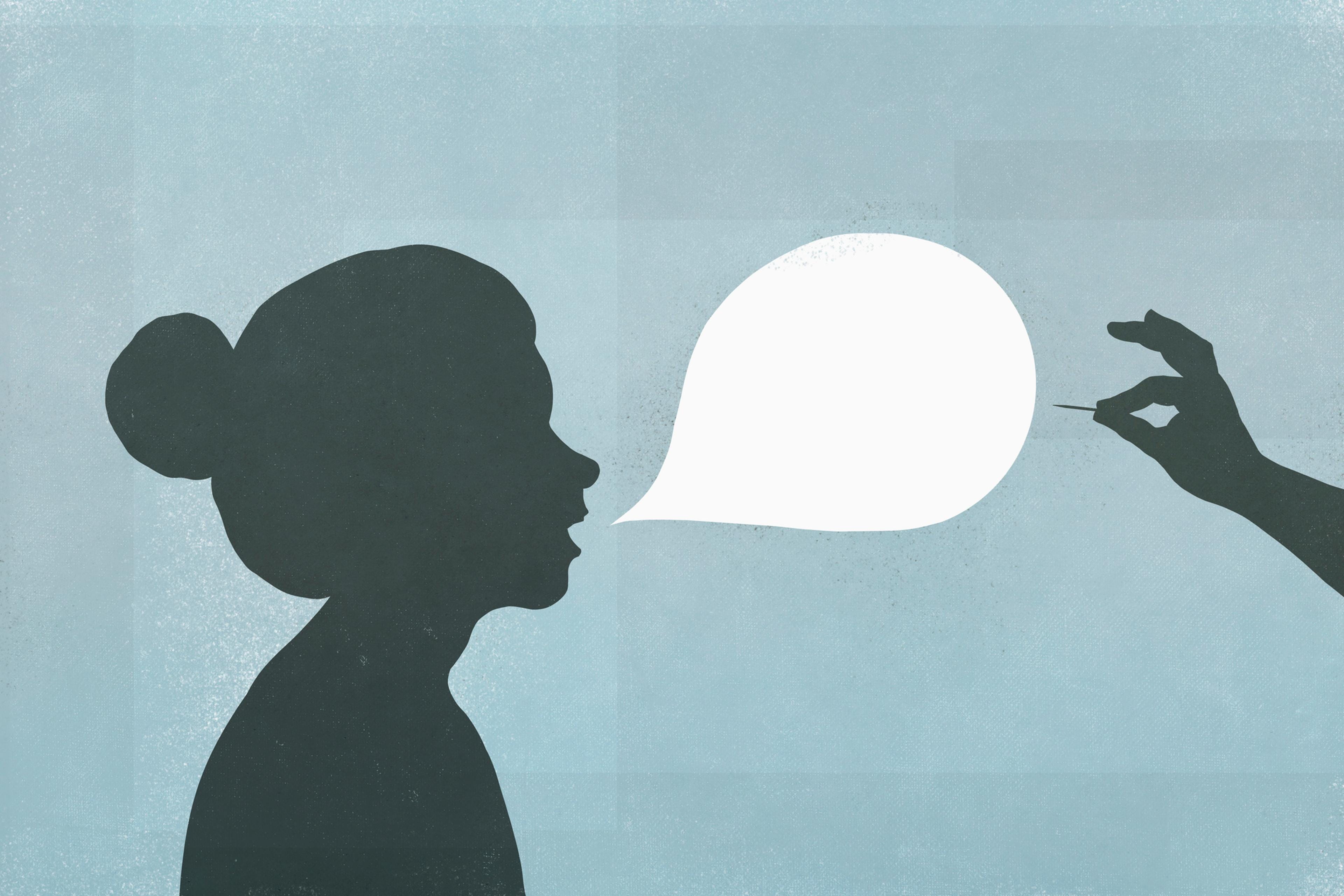
There is a certain loneliness that isn’t about being alone. Even beside someone—on the sofa, at dinner, in bed—you can feel as if you’re talking through glass.
The usual name for what’s on the other side of the glass—emotional unavailability—is one of those “therapy-speak” expressions that has been used so often and so loosely that it has nearly lost its meaning. In dating conversations, it describes a partner who is slow to text back or reluctant to define the relationship. Therapists use it for something more specific: a persistent, identifiable difficulty engaging with one’s own emotions, and, as a result, the emotions of others.
Emotional unavailability rarely announces itself. It appears as a subtle flatness in conversation, a topic change when things get real, or a response so intellectually competent it leaves you cold. You share something that matters. They nod, offer a reasonable observation, and reach for the remote. Not cruel—just absent in a way that’s hard to name. When you hurt, they don’t move closer. When you’re excited, they match your tone, not your energy. Their inner world is off-limits, and yours—a place of needs, moods, and unfolding inner life—elicits polite incomprehension.
The most reliable signal is what you do before you speak. You know the feeling as walking on eggshells—though here the shells crack around silence, not rage. Call it pre-editing: revising your feelings in advance, calculating what you can safely share, bracing for a lukewarm response. That wariness is diagnostic. You've already sensed, even unconsciously, that the channel isn't fully open.
Timing makes things confusing: early warmth, then withdrawal. A partner who was attentive at first grows distant as intimacy deepens. It’s not duplicity—just a nervous system responding to rising stakes.
“Emotionally unavailable” isn’t a clinical diagnosis, so it requires further explanation. When someone consistently avoids emotional connection, the important question is not whether there is anything wrong with them, but rather what they learned about closeness from early experience.
Attachment theory offers a useful map here. In early life, we develop working models of relationships: implicit templates about whether vulnerability is safe, whether others can be relied upon, and whether needing someone will result in comfort or rejection. For children who grow up with caregivers who were inconsistently responsive—or who seemed uncomfortable with emotional expression themselves—the adaptation is predictable: dial it down. Become self-sufficient. Don’t expect much from others, and they won’t disappoint you.
This is what attachment researchers call insecure-avoidant attachment. People with this style tend to minimize emotional experience, to pride themselves on independence, and to find genuine intimacy faintly threatening.
They’re not cold—often they’re the warmest people at a party. But as a relationship deepens and emotional demands increase, old patterns return. Distance becomes a form of regulation. Closeness can feel like a trap. They're sometimes wrongly labeled “commitment-phobic.”
Couples therapists often see a pairing: the avoidant partner with an anxious one. When closeness intensifies, the avoidant withdraws while the anxious pursues, trying to close the distance. Each reacts to the other’s tendencies: the avoidant retreats further, the anxious escalates, creating a self-sustaining cycle. Anxious and avoidant people are drawn to each other—the avoidant’s self-containment feels like strength, the anxious partner’s expressiveness seems to fill a gap. The fit feels instinctive—until it doesn’t. The reverse matters too: an avoidant person with a secure partner may slowly learn that intimacy is safe. Security is contagious. The nervous system learns by experience.
The German philosopher Arthur Schopenhauer captured the underlying tension with his characteristic bleakness. He described a group of porcupines huddling together on a cold winter’s night for warmth, only to prick each other with their quills and pull apart. Then, as they grew cold again, they drew close once more. Freud—who liked the metaphor and kept a small porcupine figurine on his desk—borrowed this image to describe what he believed to be fundamental to human sociality: we need each other, and we hurt each other. The distance we eventually settle on is the negotiated compromise between these two facts. The avoidant-anxious pairing is, in many ways, a failure to find that distance. One partner barely tolerates the quills and keeps retreating, while the other, desperate for warmth, keeps closing the gap. Neither has fully learned that staying close enough—without fusing or fleeing—is a skill, not an instinct. It must be practiced.
“Love consists in this: that two solitudes protect and border and greet each other.” —Rainer Maria Rilke, Letters to a Young Poet
At the more pronounced end of this spectrum sits Avoidant Personality Disorder—a pattern that goes far beyond attachment style into a pervasive fear of intimacy and rejection so significant that it shapes how someone moves through the world. Despite craving close relationships, individuals with Avoidant Personality Disorder isolate themselves to avoid the intense emotional pain of perceived judgment. They genuinely want connection; the problem is that it feels dangerous. Anticipating humiliation or rejection becomes so persistent that withdrawal is their default, regardless of how safe or loving the relationship is.
Emotional unavailability is rarely a conscious choice. It usually stems from learned strategies to cope with early emotional environments—a central reason it feels so difficult to address directly in relationships.
A person who shuts down when you cry likely grew up in a household where distress was managed or avoided rather than witnessed. They learned to change the subject, make a joke, or quietly leave the room rather than offer comfort.
What you can actually change
The first uncomfortable thing to sit with is that you cannot rewire another person. What you can do is get specific about what you actually need, and create conditions where the conversation has somewhere to go besides defensiveness.
Broad complaints (“you’re never emotionally available”) are received as verdicts rather than invitations. They produce exactly the shutdown you’re trying to address. More precise observations tend to fare better: what happened in a specific moment, what you needed in it, what it felt like to not receive it. The goal is to make yourself legible without making your partner feel accused.
It’s helpful to name the dynamic without pathologizing it. There’s a difference between “you’re emotionally unavailable” and “I notice when I’m upset, you go quiet—can we talk about that?” One closes the door; the other leaves it ajar.
Pre-editing is also where your own leverage lives. Every time you trim or withhold a feeling to keep the peace, you confirm the arrangement and unconsciously reinforce the unwanted behavior: nothing real goes through the glass, so nothing real comes back. Sharing something unedited—small, specific, unrehearsed—gives your partner something true to meet. And when they take a step toward you, however clumsy, receive it well. A step that lands teaches them that approaching is safe; a step that gets graded teaches the opposite.
That said, your partner’s response to being told how you feel is its own kind of data. Willingness to stay in the discomfort of that conversation—to hear it without immediately deflecting or reframing—suggests that change is possible. Repeated dismissal suggests something harder.
Because emotional unavailability runs deep, therapy is often where real work happens. Not because a therapist fixes things, but because having a third person present changes the dynamics of the relationship. Patterns invisible in private become visible. The emotionally unavailable partner receives a structured, safe place to face feelings they’ve long avoided.
Change is possible—but it requires the avoidant person to genuinely want something different. With enough experiences of emotional safety, the brain can update its expectations about intimacy. Closeness stops feeling threatening, but that learning requires time, repetition, and a willingness to be known.
You can be a steady, non-reactive presence. You can communicate clearly. You can make the relationship a safe place to be vulnerable. What you cannot do is want it more than they do.
At some point, if nothing shifts, the question is simple: Is this the ceiling, or do you want a different building?
It's interesting because I don't think most people wake up one day and decide to hide parts of themselves. It happens gradually. One conversation goes badly, then another, and before long you're having two conversations every time... the one in your head and the one out loud.
The porcupine image is perfect. What you're describing is the pursue-withdraw loop in its purest form, where the avoidant reads closeness as a demand and distance as regulation. We mapped that cycle from both sides, since neither person is the villain in it: https://twogle.com/blog/pursue-withdraw-loop. The "pre-editing" observation is sharp. (Founder of Twogle here.)