

There’s a question I hear regularly, usually phrased with an awkward combination of guilt and confusion: “Why can’t I maintain friendships like other people?” The person asking is often introverted, scores high on neuroticism, and has a social circle that looks suspiciously sparse.
What they’re really asking is: what’s wrong with me?
The answer, more often than not, is nothing. What’s wrong is the assumption that everyone should be able to sustain the same amount and intensity of social interaction. When you combine the personality traits of low extraversion (a preference for lower-stimulation environments) with high neuroticism (which amplifies sensitivity to threat and negative emotion), you get someone whose capacity for social interaction is genuinely and neurologically different from the extroverted baseline our culture treats as the norm.
Susan Cain’s work on introversion helps clarify this. According to Cain, we live in an “extrovert ideal” culture that prizes constant sociability, assertiveness, and visible enthusiasm. In this worldview, having few friends is seen as a failure. But this judgment rests on a fundamental misunderstanding of biological principles.
The stimulation threshold problem
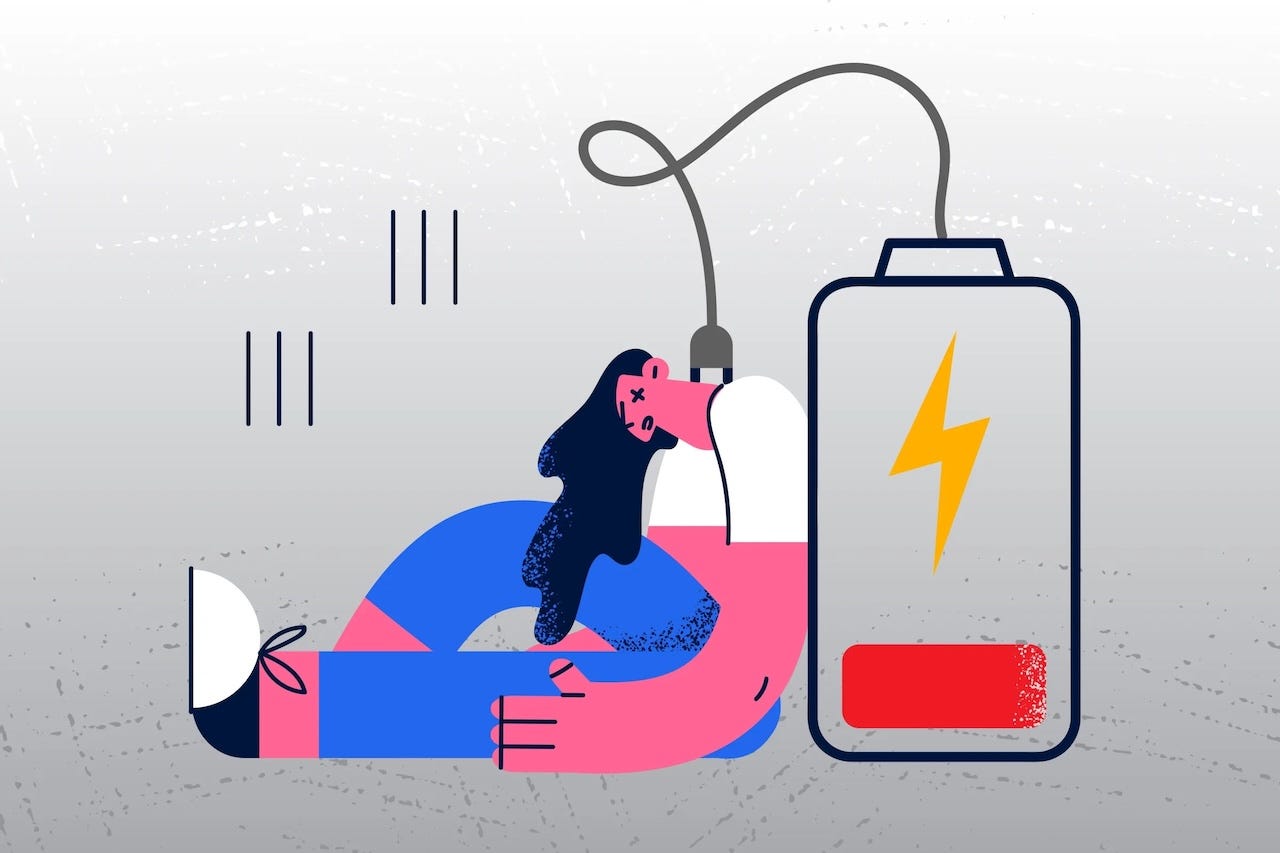
Introversion isn’t about whether you like or dislike people. It’s about achieving the right level of stimulation. Introverts are more sensitive to external stimuli and often have a greater awareness of other people’s emotions. Their nervous systems process information more intensely. This means that the same level of social interaction that energizes an extrovert can quickly overwhelm an introvert.
This is biological wiring. So, it’s neurological, not psychological. Research suggests that introverts have a higher baseline cortical arousal. In plain English, it means they’re already closer to their optimal stimulation threshold before any social contact even begins. Add more input—conversation, background noise, complex emotional dynamics—and they quickly exceed that threshold. The result isn’t enjoyment that builds with more interaction; it’s exhaustion.
Now, add a layer of high neuroticism to that. Neuroticism is a personality trait that makes someone more or less sensitive to negative emotions, including frustration, disappointment, grief, pain, threat, uncertainty, and anxiety. People who score high in neuroticism have a threat-detection system that runs constantly in overdrive. They notice subtle social cues that others miss, such as a slight change in someone’s tone, a pause before a response, or a facial expression that doesn’t quite match the words.
What makes this combination of traits particularly intriguing is that it produces heightened empathy. These individuals are not just better at noticing emotional cues; they actually relate to them. They pick up on other people’s feelings, often before they are verbalized. This makes them exceptionally attuned friends. On the flip side, it can also make them emotional sponges with a high price to pay when boundaries are not carefully established.
This empathic sensitivity comes at a cost. The same brain wiring that enables empaths to perceive others’ feelings easily also keeps them in a constant state of alertness. For them, every social interaction requires processing not just the content of conversations, but also constantly monitoring emotional undercurrents and potential threats. Their systems are simultaneously tracking: What is this person feeling? Am I saying the right thing? Did that comment land badly? Are they annoyed? Am I too much or not enough?
This isn’t paranoia. It’s the price of being highly perceptive. The very qualities that make you deeply empathic also make social situations significantly more stressful. When you’re running multiple processing channels at once—managing your own stimulation levels, monitoring for social threats, and absorbing others’ moods—socializing is exhausting. By the time a simple coffee meeting ends, you’ve accomplished the cognitive equivalent of working a triple shift.
When shallow connections are impossible
Introverts tend to prefer depth over breadth in relationships. It’s not just a preference, like “I dislike superficial conversations.” It’s more like a metabolic requirement. When social interaction is draining, you can’t afford to expend those resources on friendships that aren’t fulfilling.
Think of it as an energy budget with tight margins. If you can only muster the energy for meaningful interactions twice a week, you won’t invest it in small talk, superficial friendships, or relationships maintained out of obligation. The math doesn’t add up.
This is where high neuroticism exacerbates the problem. The same quality that makes these individuals highly empathetic—able to read emotional nuances and respond with genuine understanding—also makes maintaining superficial friendships particularly draining. They aren’t just pretending to be nice; they’re actively absorbing emotional information from others while managing their exacerbated stress response to the situation.
Superficial friendships require you to present a pleasant, simplified version of yourself, hiding anything complex. People with this trait are acutely aware of this performance. They perceive the incongruence between their internal experience and their external display. That gap registers as a threat: If others knew what they were really thinking, would they still like them? And their natural empathy allows them to pick up on what the other person is actually feeling underneath their social performance. Yet another layer of information for them to process.
The result is a triple drain: the baseline depletion of introverts from stimulation, the additional mental workload of neurotics from threat monitoring, and the empathic absorption of others’ feelings. After an hour of conversation, you’re exhausted, not because anything went wrong but because your nervous system has been working overtime on multiple fronts simultaneously. Eventually, you stop accepting invitations to events that won’t be worth the effort.
The depth problem that creates isolation
Cain points out that many scientific, artistic, and philosophical breakthroughs emerged from solitude, not collaboration. Introverts do their best thinking alone, away from group stimulation. It creates a social paradox: the very condition that enables them to think deeply (solitude) also prevents them from easily forming the connections they need.
For introverts who are high in neuroticism, this paradox is intensified. They seek friendships where they don’t have to perform, where their sensitivity is welcomed rather than seen as a burden, and where silence is restorative. But forming these types of friendships requires initial vulnerability, which their threat-sensitive systems are designed to avoid. So, they often wait for the other person to show a white flag first. They wait to avoid being judged, misunderstood, or rejected. They wait so long that new friendships expire from a lack of momentum, or the other person assumes disinterest and stops contacting them. What appears to be selectiveness is often the introvert’s nervous system protecting them from anticipated pain for too long.
The necessary adaptive trade-off
Many people with this trait combination learned to manage their intensity as kids. Perhaps they were the “sensitive” child who cried easily, worried excessively, and required constant reassurance. They may have learned that their feelings were inconvenient and that others liked them better when they were less emotional.
This teaches a specific adaptive skill. You learn to accurately read others—not as a skill, but as an automatic response—anticipating needs and providing support and reassurance. Your empathic capacity enables you to genuinely understand what others need emotionally, often before they can articulate it. Because you can hold their emotional complexity without flinching, you become the “good” friend others turn to in crisis.
But you also learn that your own needs are a liability—something to minimize or hide. The same level of alertness that makes you attuned to others also makes you acutely aware of how your emotions could burden them. So, you hold back on your needs. It’s a bad deal in the long run. Introverts often excel at active listening. They notice what others miss. They think before responding and create space for others to be heard. But when this natural strength is combined with the amplified emotional perceptiveness of high neuroticism and the learned belief that one’s needs are excessive, the result is one-way friendships in which one person gives continuously while revealing almost nothing of substance about themselves.
From the outside, these friendships seem functional. You’re the “nice guy”, dependable, supportive, and present. But deep down, these friendships are hollow. People know you for what you provide, not who you are. As an introvert, you lack the energy to maintain relationships built on this one-sided foundation. Often, you’re not assertive enough to change that dynamic.
At some point, the depletion outweighs the connection, and you withdraw.
Slow fade as a biological boundary
People with these personality traits rarely experience dramatic breakups in friendships. To avoid conflict, they choose to gradually disappear. Texts go unanswered for longer periods. They decline invitations more frequently. Plans are canceled at the last minute with seemingly genuine excuses.
From the other person’s perspective, this can be confusing or hurtful. But from the introvert’s perspective, it’s often the nervous system finally enforcing boundaries that should have been set much earlier. Each interaction that required masking discomfort, every exchange that stayed determinedly shallow when you needed depth, each moment of absorbing someone else’s feelings while suppressing your own, each time you override your need for solitude to maintain the appearance of being “normal”. And these costs quickly add up.
Our culture often pathologizes introversion by viewing solitude as antisocial instead of recognizing it as a way to recharge. But for introverts, however, “alone time” isn’t avoidance; it’s how they return to baseline. Recovery time is critical. You’re not only recharging from stimulation, but also processing all the emotional information you absorbed and all the potential social threats you monitored. Your nervous system needs time to process everything it took in.
The withdrawal isn’t personal. It’s physiological.
What actually works for this wiring
The therapeutic work here isn’t about forcing yourself to become more social, less sensitive, or less anxious. It’s about designing a social life that fits your actual capacity rather than some imagined standard imposed by others.
We need to stop treating extraversion as the norm and introversion as a deficit. If you’re introverted and highly sensitive to negative emotions, you simply can’t maintain as many friends as an extrovert. Your nervous system processes information at a different level. Pretending otherwise leads to chronic depletion.
What you need instead are relationships with specific characteristics:
Other people understands that your need for solitude doesn’t mean you’re rejecting them. They don’t need constant reassurance to feel secure in the friendship. They can tolerate gaps in communication without feeling abandoned.
They accept that you have the energy for depth when you have it. Conversations can be deeper without requiring you to establish your credentials through small talk first. When conditions feel safe, you can open up relatively quickly.
Your sensitivity isn’t viewed as a problem. When you say, “That hurt my feelings,” or “I need to think about this,” there’s no contemptuous eye-rolling or accusations of being “oversensitive.” Your emotional response is accepted as valid information, not as a character flaw.
There’s room for complexity. You don’t have to oversimplify your internal experience or dumb down your feelings. You can feel uncertain, ambivalent, or intense without risking your friendships.
Reframing scarcity as discernment
If you’re introverted and highly sensitive, having few friends isn’t a sign of social failure. It’s often an appropriate response to limitations in your capacity for social stimulation and to a low threshold for emotional threats.
It’s important to stop pathologizing a different—not lesser—way of being wired. Biologically, an introvert’s nervous system requires more recovery time, environments with lower stimulation, and fewer, more intimate relationships. That’s not a deficit. It’s designed that way.
The problem isn’t your friend count. It’s the cultural script that tells you it should be higher, and the internalized belief that there’s something wrong with you because you can’t sustain relationships the way other people do.
Having a small social circle doesn’t mean you’re inadequate. It’s proof that you’ve learned, perhaps through painful trial and error, what you can maintain. The goal isn’t to override your biology through sheer grit. Rather, it’s about building a social life that honors your needs. A life where solitude is maintenance and selectivity is wisdom, where you finally stop apologizing for what you need and who you are.
So amazingly accurate Rob! This article resonated deeply and I'm grateful 🙏
What Rob shared here is an x-ray of my and many other's soul. Feeling guilt for not "always being there" for our many (or few) acquaintances is so ubiquitous in an introvert's pocketful of weird feelings. Usually it includes our closest family, leaving us (and them) believing that we don't love them enough or, at least, in a healthy way.
Loud people, obnoxious alpha dudes, chatter boxes, gossipy neighbours and shallow conversationalists seem to drain our social batteries dry. Is it just me? Are we f---ing crazy? Are we annoyingly soft? Is it our shadows saying hi?
Rob teaches us here to UNDERSTAND OURSELVES and our unique wiring. Lets balance things out, make an effort and, at the same time, have compassion for ourselves and our biology.
Thank you Rob for mapping out the territories of our brains and souls.