

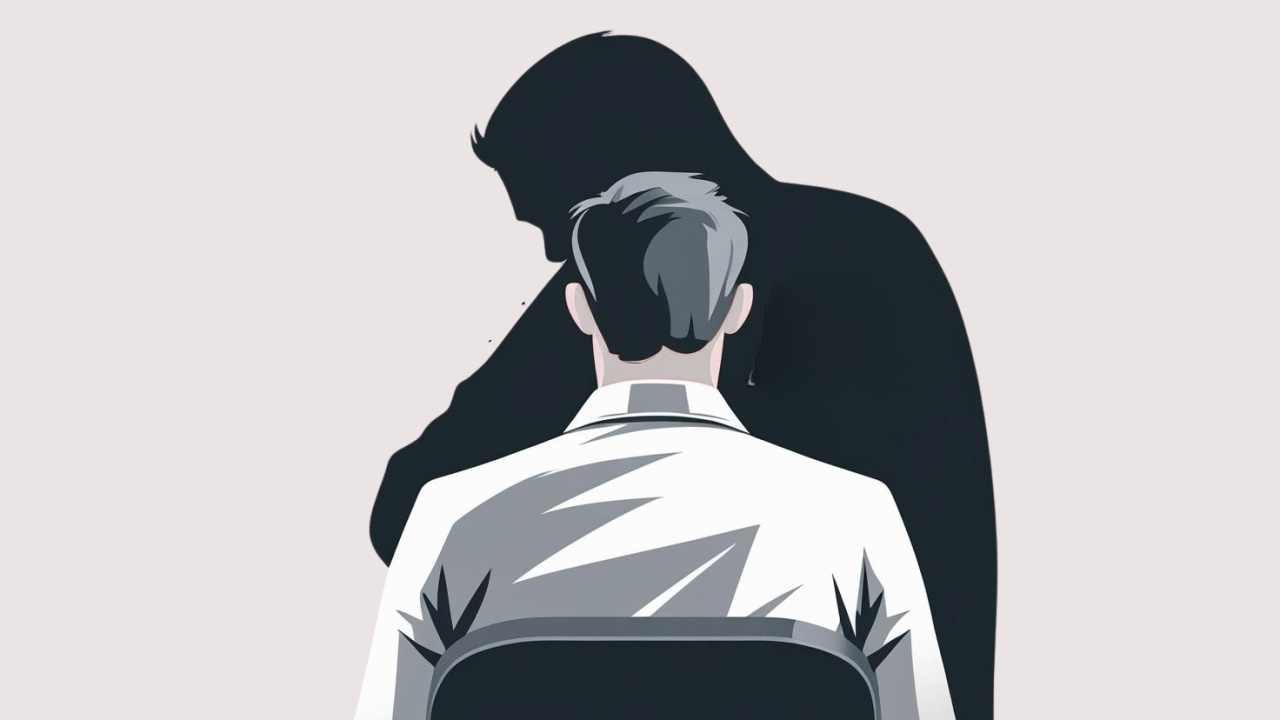
Contemporary male anxiety is quietly paradoxical. It tends to manifest through physical symptoms—tight chest, racing heart, and an uncomfortable sense that something is wrong—in situations where nothing dangerous is actually happening. You’re not under attack. You’re not starving. In fact, you’re probably sitting in a moderately comfortable chair, holding an overpriced Starbucks latte. Yet your nervous system insists otherwise. This is not a malfunction. It is, unfortunately, a kind of miscommunication.
Understanding it is more useful than trying to talk yourself out of it.
In short, modern male anxiety stems from a mismatch between our innate stress responses and today’s cultural environment. This heightened anxiety level is often attributed to economic, political and social factors. However, the deeper source lies in the disconnect between men’s physiology, cultural signals and identity. Rather than treating the symptoms or popping a Valium, addressing this core conflict is key to solving the problem.
To better understand this issue, consider the shifting context of masculinity. Today is an ambivalent time for masculinity; this is not a reactionary grievance. From advertising to academia, traditional masculine traits—assertiveness, stoicism, physical dominance, competitiveness, protectiveness—are often labeled pathological.
It is rather telling that the American Psychological Association’s (APA) 2019 guidelines labelled ‘traditional masculinity ideology’ as harmful, emphasising self-reliance and toughness as risk factors. Whatever the clinical case, the message was clear: being a certain kind of man has become problematic.
This cultural message about masculinity often begins long before adulthood. For many men, the first exposure is in a classroom. Modern schools are statistically and culturally female-led—values, expectations, and definitions of success reflect this. Sit still. Wait for your turn. Use words to express yourself. Manage emotions quietly. Collaborate, don’t compete. These reasonable requests often misfit the average eight-year-old boy, whose nervous system runs a different operating system. Boys who roughhouse, struggle to sit for hours, process difficulty through action, or compete aggressively—behaviors developmental psychologists call normative—now face discipline, behavioral labels, and often medication. The message, delivered early and often, is that their instincts need correction. In the US, Ritalin prescriptions for ADHD run 3:1, boys to girls. This isn’t coincidental.
These early messages leave boys lasting impressions. Over time, they learn their impulses are dangerous, their energy disruptive, their instincts to be managed, not directed. By adulthood, many have internalized an apologetic or ambivalent relationship with masculinity, distrusting traits that build character and resilience when cultivated.
Men face a double bind: traits once used to manage stress—purpose, risk tolerance, competitiveness, physical competence—are now discouraged, weakening coping mechanisms.
To understand why this matters, consider how psychological stress has historically been linked to physical action. Threats triggered movement—running, lifting, building, fighting. The body flooded with cortisol and adrenaline, used its resources, and then—crucially—discharged that energy through exertion. Recovery followed. The nervous system is self-regulated through action.
A stressful work email now triggers a neurochemical response once reserved for physical threats. With no outlet, cortisol builds, leaving men restless and exhausted—the nervous system doing its job in a new context.
The ongoing rise in anxiety is rooted in this cultural contradiction: masculinity is consistently criticized without offering constructive alternatives. This intensifies the core mismatch between external expectations and internal drives, directly fueling male anxiety.
Physical deconditioning worsens the problem. When the body is untrained, the world seems more threatening. A trained body knows, but an untrained one doesn’t. Fight Club illustrates this concept: Tyler Durden noted that men raised by single mothers didn’t know what to become. The film’s solution was crude, but its diagnosis was accurate.
Purpose matters. Without a clear sense of purpose, responsibility, or meaningful challenges, men may have difficulty finding constructive ways to solve problems, build resilience, and overcome challenges. The desire to strive stems from having meaningful problems to solve. Without an outlet, this drive turns inward, creating dread. When individuals doubt their ability to tolerate stress or hardship, anxiety increases. Confidence grows from repeated exposure to manageable challenges rather than introspection alone. Without concrete, meaningful challenges, a man will feel anxious with excess energy and no outlet. Meaning lies in responsibility and overcoming hardships.
There is more to this than productivity or stress management. Viktor Frankl, writing from inside a Nazi concentration camp in Man’s Search for Meaning, observed that survivors were rarely the physically strongest—they retained purpose, making suffering intelligible. His conclusion was nearly theological: meaning isn’t a luxury, but the structure beneath everything. Men, perhaps more than they admit, organize their psychological lives around function—being useful to something bigger than themselves. A father might skip the gym for himself but run through a wall for his kids. A man indifferent to his health will keep discipline for others. This isn’t a pathology to correct; it’s a motivational system worth understanding. When men lose causes worth serving, by circumstance or cultural messaging, they grow unanchored. An unanchored nervous system generates emergencies. Anxiety is often less a disorder than a signal: the organism noting it lacks direction.
This view does not overlook harmful masculine behaviors. Instead, it recommends addressing them directly. Simply criticizing aggression without offering outlets, responsibility, or a path to a positive identity is ineffective and can trigger feelings of shame and fuel anxiety and mental health decline.
The path out of this is not, ultimately, a therapeutic one—at least not in the way the word is currently used. It does not involve reprocessing the cultural messaging, achieving a more balanced relationship with one’s feelings, or finding the right framework for self-understanding. It involves doing things. Hard things, preferably. Things that produce evidence and build resilience. The body that trains regularly, sleeps adequately, and carries genuine responsibility does not need to be philosophically persuaded that the world is manageable— it knows it, in the way that only repeated physical and psychological challenge can teach.
Aristotle called this habituation: virtue, he argued, is not a conclusion one reaches but a disposition one builds, through action repeated until it becomes character. He was describing the nervous system two thousand years before anyone had a name for it.
What men are hungry for—and what the current cultural conversation is spectacularly ill-equipped to provide— is not validation but direction. Not permission to feel their feelings but permission to be genuinely useful, to take on weight, to be the kind of person that a situation or a family or a community actually requires.
The anxiety that plagues so many men today is not, at its root, a deficit of self-awareness. It is the sensation of a capacity with nowhere to go. Engine running, no road in front of it. The resolution is not insight. It is motion, moral engagement, commitment, and the quiet, cumulative dignity of showing up for something that matters.
There are lots of problems that need energetic problem-solvers. What's preventing men from tackling them?